Vinyl Fence Installation in Jackson, TN
PVC privacy, picket, and ranch rail fence for homeowners who are done staining wood every few seasons.
Vinyl Fencing for Jackson and West Tennessee Properties
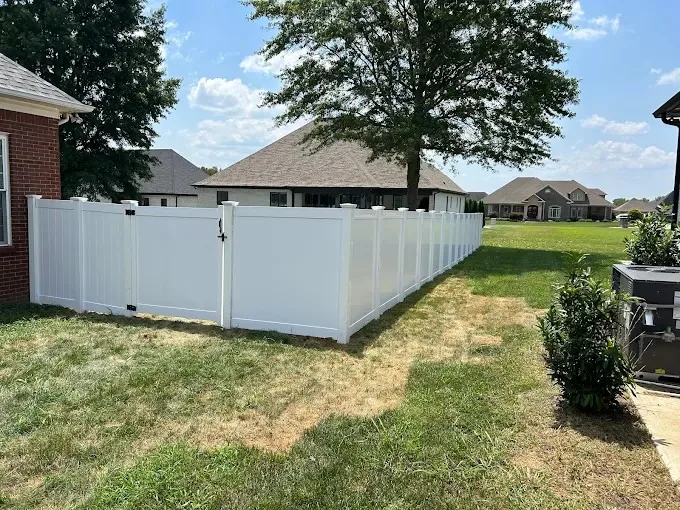
Vinyl fence is PVC panels and posts, extruded in a color that runs all the way through the material instead of sitting on top of it as paint. That's the whole pitch, and it's a good one in a climate like ours. Nothing to stain, nothing to rot, and nothing for termites to eat. We install it across Jackson and out into Madison County, mostly for homeowners on their second fence who remember what the first one cost them in weekends.
What separates a vinyl fence that lasts from one that sags is what's inside it. Good panels have aluminum or steel stiffeners in the bottom rail on wide spans, thicker walls, and UV inhibitors in the compound. Cheap vinyl is thin, chalks in the sun, and gets brittle. They look the same at a glance, so we spec the grade on the quote.
Get a free estimate
Call or text Greg at (731) 555-1234, or use the form. Photos of your yard help.
Free on-site estimates in Jackson & West Tennessee.
Who a vinyl fence is for
Vinyl is for the person who wants a privacy fence and does not want a maintenance schedule. If you like the idea of a solid screen around the back yard but the phrase "restain every few seasons" makes you tired, this is your material. It's also a good fit for pool surrounds, since it doesn't splinter and it doesn't care about chlorine or standing water.
It's the wrong call in two situations. One, if you want the look and smell of real wood, vinyl will never be that, and no texture pattern changes it. Go with wood fencing and accept the upkeep. Two, if the fence has to take abuse, vinyl is the wrong choice. It's tough in normal use and it cracks when something hits it hard in cold weather. A fence line that gets bumped by livestock or equipment wants something else.
Color is more limited than people expect. White and tan cover most of what's made, with a few gray and woodgrain-look options. If you want a dark fence that disappears against a tree line, aluminum does that better.
Styles and options we build
Vinyl comes in fewer profiles than wood, but the ones it has cover most jobs.
- Solid privacy. Tongue-and-groove boards with no gaps. The most requested vinyl fence, usually with a flat, scalloped, or lattice top section.
- Semi-privacy. Boards with narrow gaps, or a lattice or picket band across the top third. Lets light and air through while still screening the view.
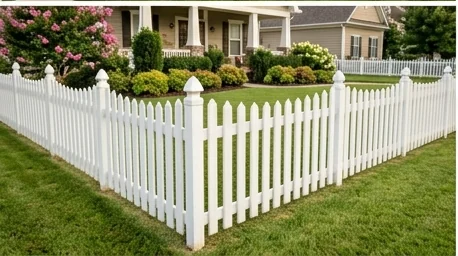
- Picket. Spaced pickets, front yards and garden borders, with pointed, gothic, or flat caps. More on the picket fence page.
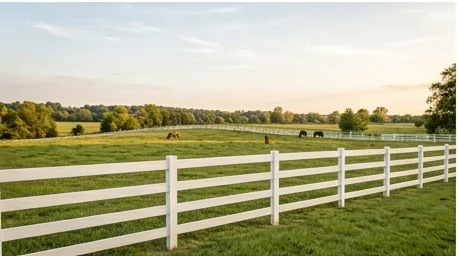
- Ranch rail. Two, three, or four rails, no infill. Driveway lines, paddocks, and property edges. Covered on split rail and farm fence.
- Pool style. Picket spacing and a bottom clearance that meet barrier requirements, with self-closing and self-latching gate hardware. See pool fencing.
Post caps are the one detail people don't think about until they see it. Flat, ball, gothic, and new-england profiles all read differently from the street. Gates need a steel-reinforced frame on anything wide, because an unreinforced vinyl gate will rack and drag inside a year.
How vinyl holds up in West Tennessee conditions
We're in zone 7b, humid subtropical, and that combination is rough on wood and almost irrelevant to vinyl. PVC doesn't absorb water, so the humidity that rots a pine post does nothing to it, and insects ignore it. Our winters rarely get cold enough for brittleness to matter, though a hard freeze plus a direct impact can crack a panel, worth knowing if a basketball hoop lives near the fence line.
Vinyl does expand and contract with temperature more than wood. That's why panels float in the post channels instead of being fastened tight, and why a fence installed without that allowance buckles in summer. An install detail, not a material flaw, but a common one to get wrong.
Our soil is the real variable. The uplands here sit on the Gulf Coastal Plain under a cap of wind-blown loess, a fine silt with no rock in it. It holds water and moves as it wets and dries, and that movement pushes posts out of plumb. On vinyl it shows faster than on wood, because a solid white panel line makes every bit of lean obvious. Depth, a footing that can't lift, and drainage keep the line straight. Details in setting fence posts in West Tennessee soil.
Wind matters too. Two F4 tornadoes and an EF4 are on Jackson's record, the last of them across the Union University campus, and a solid vinyl privacy fence catches wind like a sail. Some manufacturers design the bottom rail to release the panel under enough load so the posts survive, which sounds like a defect until the day it saves your fence line. Storm damage repair covers the aftermath.
What it costs, roughly
No per-foot number here, because one that fit every yard in Madison County would be too wide to be useful. What moves the number:
- Total footage. The biggest factor by far.
- Height. Taller panels, longer posts, deeper holes, more concrete.
- Grade of vinyl. This one matters more on vinyl than on any other material. Wall thickness and internal reinforcement separate a fence that stays straight from one that doesn't.
- Gates. Every gate is its own project, and reinforced wide gates cost well more than the same width of fence.
- Grade of the ground. Vinyl panels don't rack much, so slopes get stepped, and stepping is slower.
- Old fence removal. Pulling an existing fence and its footings adds labor and disposal.
Ranked against each other in this market: chain link is the least expensive fence we build, treated pine privacy next, then cedar. Vinyl generally lands above wood and near aluminum, and ornamental iron is usually the most expensive common option. Where vinyl earns it back is on the other side of the purchase, since there's no stain, no sealer, and no labor to reapply them. The Jackson fence cost guide covers how an estimate gets built.
Maintenance and how long it lasts
Wash it. That's the whole program. A hose handles pollen, and mild soap with a soft brush handles the green film that grows on the shaded side. Keep mulch and clippings off the bottom rail so the dirt line doesn't stain. Skip abrasive pads and don't hold a pressure washer against the surface, because scuffing the finish is the one damage vinyl doesn't shrug off.
On lifespan, vinyl outlasts wood here and needs attention far less often. Ornamental iron outlasts it if the coating is kept up, and aluminum is in the same general range. What ends a vinyl fence is usually impact or a post that moved, not the material wearing out, which is the opposite of how a wood fence fails. Comparisons in the fence lifespan guide and best fence materials for West Tennessee.
Get a free estimate
Call or text Greg at (731) 555-1234, or use the form. Photos of your yard help.
Free on-site estimates in Jackson & West Tennessee.
Common questions about vinyl fence
Does vinyl fence turn yellow in the sun?
+Quality vinyl doesn't, because the UV inhibitors are mixed into the compound and the color goes through the whole wall. Cheap vinyl does yellow and chalk. This is the single best reason to pay attention to the grade on your quote rather than just the total.
Can a vinyl fence be repaired if a panel breaks?
+Yes, and it's usually a clean fix, since panels slide out of the post channels. The catch is matching. Vinyl colors drift between manufacturers and production runs, so a replacement panel can read slightly different next to weathered ones. Keeping a spare panel from the original order solves it.
Do I need a permit for a vinyl fence in Jackson?
+Inside city limits, yes. Jackson requires a fence permit application with a fee, plus a boundary survey or a signed neighbor agreement. The city also requires the finished side of a privacy fence to face adjacent properties and any public right-of-way. In the county, a residential fence seven feet or under does not need a building permit. Details on the permit guide.
Is vinyl strong enough to keep a dog in?
+For most dogs, yes, and a solid privacy panel has the advantage that they can't see what's on the other side to react to. Diggers are the real issue, and that's solved at the bottom of the fence rather than by the material. A determined chewer will find a corner to work on, and for that we'd talk about a different material.
What happens where the ground slopes?
+Vinyl panels have very little rack in them, so a slope gets handled by stepping the panels down the grade. That leaves a triangular gap under each section, which we can close with a fitted piece if you're containing a small pet.
How we work
Call and you get the person who will set the posts. We walk the property, look at the grade and the drainage, settle the line and the gate locations, and hand you a written quote that names the vinyl grade and the panel profile instead of just a total.
After you approve it, we call the utility locate. Tennessee law requires notifying 811 at least three full business days before any digging, hand tools included, so that sits in the schedule. Then posts, cure time, and panels. New builds are on fence installation and gate work on gate installation and repair.
Call or text Greg at (731) 555-1234 for a walkthrough.